
'If the jihadi infiltration attempts are assisted by the Pakistan army, the Indian Army will retaliate strongly.'

'Our civil society here is vibrant, and courageous, although it is beaten up and beaten down, repeatedly.'
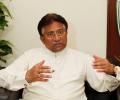
Learning perhaps from the Kargil debacle, Musharraf tried hard to evolve as a statesman in his dealings with India, recalls Rana Banerji, who headed the Pakistan desk at RA&W.
Continued uncertainty or confrontation in the Asia-Pacific is clearly in no one's interest as it will affect major powers' attempts to restructure their economies and revive growth. Conflict would roll back the gains to each of our countries of 40 years of stability and peace, says Shivshankar Menon.

The Taliban knows that Washington holds the key, points out Ambassador M K Bhadrakumar.
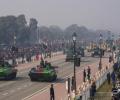
The Republic Day parade, which will begin at around 1030 am, will be a unique mix of the country's military prowess and cultural diversity, depicting the country's growing indigenous capabilities, Nari Shakti and emergence of a 'New India'.

Former President A P J Abdul Kalam kindly answered rediff.com's questions for an exclusive interview.
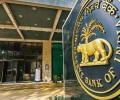
With inflation remaining at elevated levels, central banks around the world, including the Reserve Bank of India (RBI), will kill excess demand in economy over the next six to eight months, sources in the know said. They also indicated that there could be a rate hike in June, when the inflation forecast for the current financial year would be raised. The RBI, the sources said, might announce more steps such as raising the limit on held-to-maturity (HTM) bonds to support government borrowings but might not come out with any further quantitative easing GSAP (Government Securities Acquisition Programme) measures.

'The escalation of tension along the border of Ukraine with the Russian Federation is a matter of deep concern'
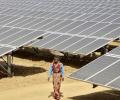
Arunabha Ghosh on why India will increasingly become an energy great power, but not an energy hegemon.
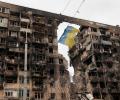
The Americans have expended a lot of diplomatic energy to coax India into toeing their line but India has refused to buckle under pressure. As Foreign Minister Subrahmanyam Jaishankar said, India has not taken anyone's side but its own side, points out Virendra Kapoor.

'Wherever in the world there is political instability, those countries are beset with severe crises today. But India is in a much better position than the rest of the world due to the decisions taken by my government in the national interest,' President Droupadi Murmu said in her address to both Houses of Parliament.

Hasty, ill-conceived steps show how isolated Mamata Banerjee had been from the national political trend. A fascinating excerpt from Sugato Hazra's Losing The Plot: Political Isolation Of West Bengal.

'She has never advocated people taking to the streets and calling for a revolution.' 'I don't know if that will change now.'

Words and actions like those of R N Ravi and a vocal section of the state BJP have only added to Tamil fears and suspicions, points out N Sathiya Moorthy.

Four-nation grouping Quad on Tuesday launched a major new initiative for the Indo-Pacific that allows the partner countries to fully monitor the waters on their shores and help ensure peace and stability in the region, a move that comes amid China's increasingly intimidatory behaviour.

Putin justified his decision in a speech blaming NATO for the current crisis and calling the US-led alliance an existential threat to Russia.

'China, much more than Pakistan, is a credible potential adversary with the ability to hurt our interests.' 'It must figure higher in our national security concerns,' says Vice Admiral Premvir Das (retd).

'The handling of the pandemic, under this totally constitutional and legal three-level dictatorship, has begun to show its downside,' observes Shekhar Gupta.

As the pandemic unfolded, the India-China relationship has come under severe stress. To restore normalcy, agreements between the two countries must be respected scrupulously in their entirety. Where the Line of Actual Control is concerned, any attempt to unilaterally change the status quo is unacceptable, declares External Affairs Minister Dr Subrahmanyam Jaishankar.

'Movement of naval forces at sea is often more than just perfunctory deployment -- reading the messages that they send is important,' alerts Vice Admiral Premvir Das (retd).

Asserting that "maritime muscle flexing" by some countries and other factors have made the Indo-Pacific region "more contested and more volatile," naval chief Admiral Sunil Lanba on Tuesday said that the Indian Navy has its task cut out as it has been a major security provider in the region.

"It would be my hope that people understand why this particular transaction is important for us," the EAM said in Washington, DC.

Will people buy as many cars as before if more office-goers are working from home? How much existing office space in commercial buildings will become surplus, and what will that mean for the construction industry, asks T N Ninan.

China's presence in the international dog house is just the kind of opportunity that his opponents must be waiting for, predicts Colonel Anil A Athale (retd).

Colombo seems to be veering to the middle path between China and the US on global matters, but in regional matters of strategic security, it is increasingly identifying with India, points out N Sathiya Moorthy.
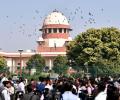
Tamil Nadu's unending legislative fight for exemption from NEET has now flagged the question if it's time to review the Supreme Court's famous verdict in the 'Mandal case', fixing 50-per cent upper-limit for all reservations, asks N Sathiya Moorthy.
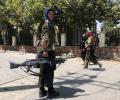
A closure of the Indian mission in Kabul will be a Himalayan blunder at this historic juncture when the wheels of diplomacy and politics are set to accelerate in Afghanistan, argues Ambassador M K Bhadrakumar
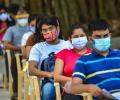
An alert government in Delhi should have begun government-to-government discussions with Moscow the moment it came to know that Russians were developing a vaccine. That is to say, almost an year's time has been lost, observes Ambassador M K Bhadrakumar.
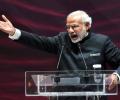
In an apparent swipe at his detractors back home, Prime Minister Narendra Modi on Thursday said some people only talk about problems while his government was trying to resolve them.
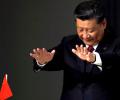
The Chinese leader is today facing some open, or less subtle, criticism from within the party and from liberal intellectuals who are increasingly concerned by the concentration of power in his hands and the increasing authoritarianism of the regime, says Claude Smadja.

US ambassador to the UN Nikki Haley also called on all countries to sever economic and diplomatic ties with Pyongyang to curb its nuclear programme.
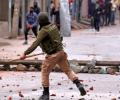
'It is time to not merely assert that Kashmir is an internal problem, but begin to act on it,' argues Colonel Anil A Athale (retd).

Modi is seen as exceptional not only on account of his acts but also owing to his style. He appears to sacrifice his life for the people -- like a fakir, a figure he came to epitomize even more in 2020 by growing a long white beard. Charisma is above accountability, and Modi has grasped these dynamics.
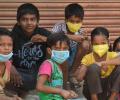
It said an estimated 42-66 million children could fall into extreme poverty as a result of the crisis this year, adding to the estimated 386 million children already in extreme poverty in 2019.
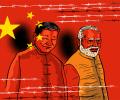
'It is time we Indians stop our internal bickering and present a united front to Chinese machinations,' advises Colonel Anil A Athale (retd).
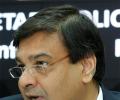
Chetan Ghate, Pami Dua and Ravindra Dholakia have been appointed for 4 years

Stressing that both the government and the opposition have 'important roles to play', the President said, "While giving expression to their political ideas both must move forward in tandem to ensure that development of the country and welfare of its people are promoted consistently."

The Modi government's defeat on farm laws underlines the perils of governing an entire continent-sized, diverse and federal nation like the chief minister of a state, observes Shekhar Gupta.
